
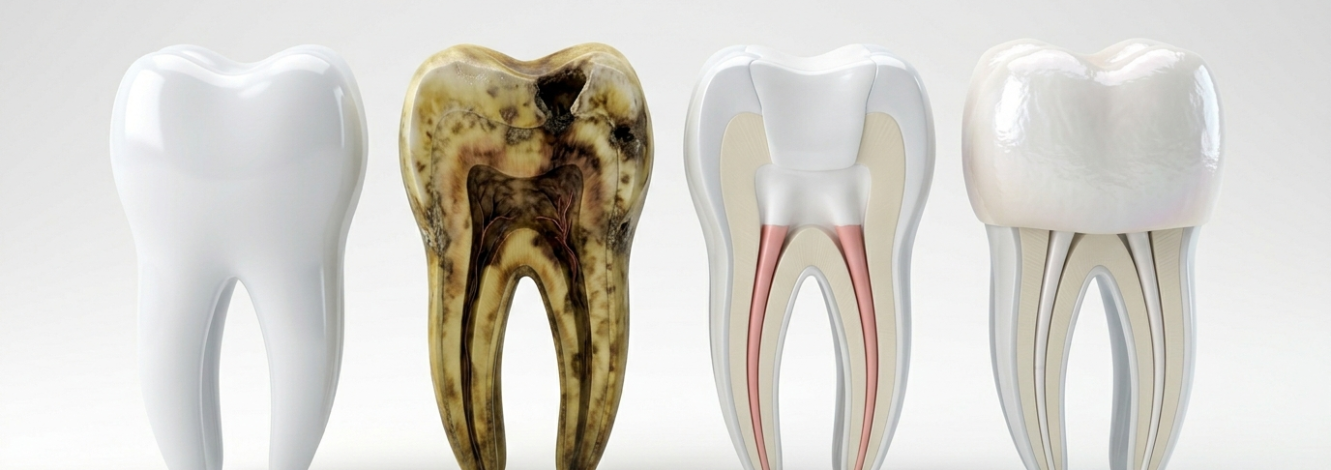
During Root Canal Treatment, the infected pulp inside the tooth is removed, and the root canals are cleaned, disinfected, and sealed.
While this eliminates infection and preserves the tooth, the procedure can also leave the tooth weaker than before. This is because:
As a result, the treated tooth can become more susceptible to cracks, fractures, and wear over time.
A dental crown acts like a protective cap that completely covers the visible portion of the tooth. It restores strength, function, and appearance while reducing the risk of future damage. Here are the key reasons why the crown is recommended
A root canal-treated tooth is often more fragile than a healthy tooth. A crown helps reinforce the remaining structure and allows the tooth to withstand everyday chewing forces.
Without proper protection, weakened teeth may crack under pressure. A crown provides additional support and helps prevent fractures that could compromise the tooth.
A damaged tooth may not function effectively after treatment. A crown restores the tooth’s shape and allows for comfortable biting and chewing.
When placed on visible teeth, crowns can also improve aesthetics by restoring the natural shape, size, and colour of the tooth.
One of the biggest benefits of placing a crown after Root Canal Treatment is long-term protection.
Crowns cover the entire visible surface of the tooth, creating a durable barrier against everyday wear and tear.
This added protection helps reduce the risk of:
Every time you chew, your teeth experience significant pressure.
A crown helps distribute these forces more evenly across the tooth, reducing stress on weakened areas and supporting long-term stability.
Maintaining natural tooth structure is always a priority in dentistry.
By protecting the tooth from future damage, a crown supports Permanent Tooth Restoration and helps preserve the remaining healthy structure for as long as possible.
Not every tooth requires a crown, but many do
Molars and premolars handle most of the chewing forces in the mouth. Because they experience greater pressure, they are more likely to require a Crown After this treatment.
Front teeth may not always require crowns if sufficient healthy tooth structure remains. However, a crown may still be recommended when:
Your dentist will evaluate the condition of the tooth before recommending the most appropriate restoration.
Some patients delay or skip crown placement after this treatment because the tooth no longer hurts.
Unfortunately, the absence of pain does not necessarily mean the tooth is fully protected.
Without a crown, the tooth may be at higher risk for:
For many patients, timely crown placement can help avoid more complex and costly dental procedures in the future.
With proper care, a dental crown can last many years.
Factors that influence longevity include:
Maintaining good brushing and flossing habits and attending routine dental visits can help maximise the lifespan of both the crown and the treated tooth.
Beyond receiving a crown when recommended, patients can help protect their treated tooth by:
These simple habits contribute significantly to successful long-term outcomes from root canal treatment.
Choosing a Crown After this treatment offers several advantages:
For many patients, the crown becomes the final step in restoring both the health and function of the treated tooth.
Root Canal Treatment is an effective way to save a damaged or infected tooth but protecting that tooth afterwards is equally important. In many cases, a dental crown provides the strength and support needed to prevent future damage and extend the life of the treated tooth.
At 1 Stop Dental Clinic in Bandra, Mumbai, treatment plans are carefully designed to help patients preserve their natural teeth and achieve long-lasting oral health. Whether you have recently undergone Root Canal Treatment or want to understand your restoration options, professional guidance can help ensure the best possible outcome for your smile.
Wondering if you need a dental crown after treatment? Consult your dentist to ensure your tooth gets the strength and protection it needs for long-term success.
We understand just how closely connected oral health is to your overall health, confidence, and appearance, and we pride ourselves on cultivating a friendly, upbeat dental environment where you can always feel comfortable in our care.
2nd floor, 203/204/302, Kanaiya, 250, Linking Rd, opp. National College, Bandra West, Mumbai, Maharashtra 400050